
Customer Success & Technical Account Management Leader
Thomas M. Aimone
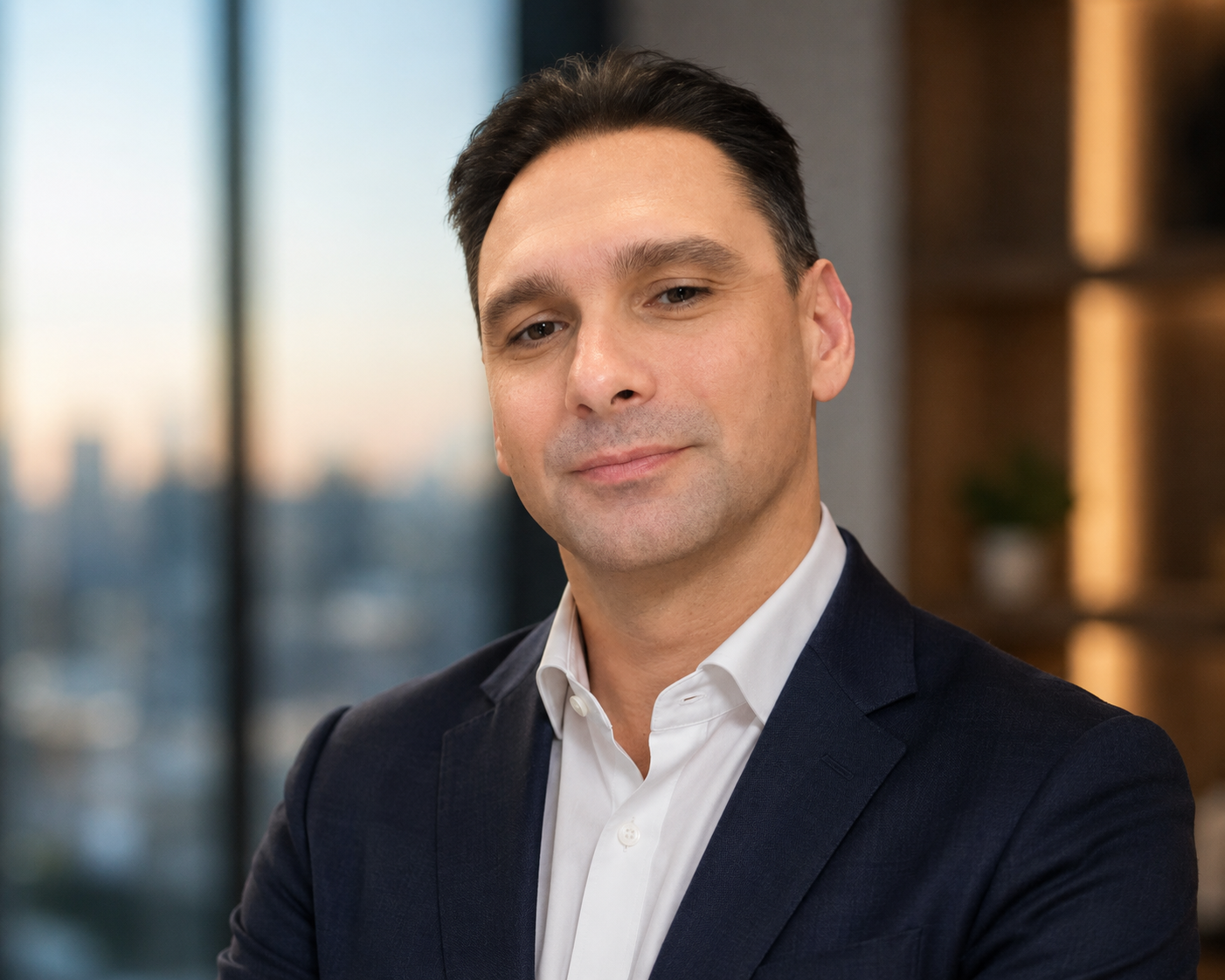
Customer Success & Technical Account Management Leader · ex-AWS Enterprise Support (TAM → Sr Mgr, 100+ person global org) · Business Operations · FinOps · AI · Cloud Migration & AI-Era Center of Excellence · Chief of Staff · Revenue Operations.
I build the mechanisms that make enterprise performance repeatable — not dependent on individuals.
I · Profile
Thirty years building from nothing
A technical business-operations leader who runs, builds, and grows the operating engine of global technology businesses — and automates the parts that shouldn’t depend on people. Nine years at Amazon Web Services leading business operations, automation, data platforms, and the executive operating cadence for a global services organization; more than a decade at Bloomberg in platform engineering and analytics leadership; rooted in early industrial-automation and IT/OT work.
The throughline is consistent: find the root problem, design the system or operating model that solves it at scale, and hold the organization accountable to outcomes over activity. Fluent end-to-end in the revenue motion (pipeline health, forecast accuracy, customer lifecycle), support operations and enterprise Technical Account Management, FinOps, AI operations, data governance, and the executive operating cadence required to run it globally.
II · Portfolio · Moments Worth Telling
Work worth pointing at
Data Governance · BI · AI Enablement
AWS Global Field Analytics Hub — The AI-Ready Data Layer
AWS Global Services had field data everywhere and insights nowhere. I was handed a whiteboard and told to fix it. What came back was a centralized analytics and data-governance platform with confidence and completeness scoring on every metric — the foundation for predictive modeling and GenAI integrations. The platform became the adopted standard for 26,000+ users and cut executive-reporting cycle time 65% at launch (ultimately 88%).
Business Operations · Executive Cadence · AI Automation
The Business Review That Ran on My Data — Then Ran Itself
Leadership can’t run a global business on gut feel. I designed the KPI architecture, data dictionaries, confidence-scored metric layer, and WBR/MBR/QBR review mechanisms that AWS Global Services used to manage performance — from the field up to senior leadership. When the weekly business review ran, the data it ran on was mine. Then I automated the review pipeline itself — fetch, AI-summarize, generate, distribute — and took 40% out of the manual reporting effort.
Org Design · Chief-of-Staff Scale
Standing Up the Function
Enterprise Support was growing faster than the operating model could keep up. I built the structure that caught up with the scale — a 100+ person multidisciplinary global function (BI engineers, data scientists, program and technical program managers, curriculum developers), a hub-and-spoke operating model, capacity-planning mechanisms, and standardized KPI scorecards. I stood up the function and defined how it ran.
Revenue Operations · Customer Health
The Churn Model & Revenue Operations Framework
The global TAM organization had no systematic way to see which customers were healthy and which were at risk. I built the first customer-health scoring and churn-risk models the field had ever had, along with the broader revenue-operations framework, P&L dashboards, and analytics infrastructure that gave leadership real-time visibility across Financial Services, Healthcare, Government, Media & Entertainment, and high-growth technology.
Cloud Migration · Cloud CoE · Financial Services
Legacy to Cloud Inside the World's Largest Banks
Core systems that predated the cloud by decades, a regulator in the room, and no playbook for running regulated workloads on hyperscale infrastructure — so I wrote the transition approach from the ground up, onsite. Workload by workload: what belonged in public cloud, what stayed on private infrastructure, and what the commitment model should be. Then the part most migrations skip — the Center of Excellence the bank ran it from: operating model, governance, standards and cost discipline, so the rigor outlasted the migration and nobody needed me to sustain it. That same CoE is the control plane an AI estate needs now — what may run where, against which data, at what cost.
People Leadership · Hiring Bar
Amazon Bar Raiser & First Manager-Excellence Recognition
Amazon’s Bar Raiser designation is earned, not applied for. I earned it and served on hiring panels across the organization. When Enterprise Support launched its manager-excellence recognition program, I was the first recipient.
Cloud Migration · Regulated Environments · Life Sciences
A Validated Life-Sciences Estate, Moved Without Breaking Compliance
Pharma and life sciences hold the hardest version of the migration problem: systems under validation, where a change you cannot evidence is a change you cannot make. Same discipline, stricter room — assess the estate application by application, separate what could move from what had to stay, and hold the validated state intact at every step, with the evidence written as you go instead of reconstructed afterward. The Center of Excellence came with it: standards, guardrails, ownership and a named exception path, so the next hundred decisions did not each need a committee. It is the same structure that now decides where AI and analytics workloads are allowed to run against regulated data.
Private Cloud · Platform Engineering at Scale
Bloomberg’s First Internal Private Cloud & Linux Estate
When I took over Global Linux Engineering, Bloomberg provisioned servers by hand. I built the private cloud and automation layer, scaled the global Linux fleet from roughly 1,000 to 20,000+ hosts with zero production disruption, and pioneered the port of legacy Terminal functions from proprietary big-iron Unix to Linux. Manual provisioning became a memory. The Terminal kept running — it always kept running.
Infrastructure Analytics · System of Record
Bloomberg's First Infrastructure Analytics Platform
Bloomberg ran on infrastructure nobody could see clearly. Operational systems held pieces of the picture, but nothing reconciled them into a single source of truth. I built that system from scratch: a unified, confidence-scored platform that ingested, reconciled, and surfaced the full lifecycle of Bloomberg’s infrastructure estate. The engineering organization ran on it.
Industrial Automation · IT/OT · 24/7 Operations
The Presses Never Stop
A newspaper never stops. I owned the IT and PLC systems for a continuous print manufacturing operation — servers, networking, AGV control, production automation, and real-time fault response across the plant floor. Overnight production meant overnight problems. Six years of that builds an instinct for operational reliability that never leaves you.
Public Sector · Network Modernization · Classroom Enablement
Project Connect — Every New York City School, One District Core
New York City’s public school system had hundreds of buildings and almost nothing connecting them. Project Connect was the public program that changed it — every school linked back to the central technology district at MetroTech in Brooklyn, and, for the first time in New York, the classroom itself put on the network. I was in the field for it, building and cutting over the in-building infrastructure school by school: closets, cable plant, switching, servers, and the first-wave classroom enablement that turned a wired room into a room a teacher could use on Monday morning. Occupied buildings, children in them, a school calendar that does not move, and no second attempt at a cutover. Same three questions as every migration I have run since: what belongs at the edge, what belongs at the core, and who runs it after the installers leave.
III · Expertise
Where I create leverage
AI-Native Operating Models
Intelligence systems and executive operating cadences leadership runs the business on.
Cloud Migration & the AI-Era Center of Excellence
Enterprise cloud migration in regulated environments — financial services and life sciences — and the Center of Excellence that has to exist on the other side of it: operating model, governance, standards, and the placement discipline that decides what runs public, what stays private, and what runs on committed capacity. The same mechanism now governs where AI workloads run and what data they are allowed to touch. Written from the ground up, onsite.
Data Governance & BI
Confidence-scored metric layers and business-insight platforms that make decisions trustworthy at scale.
FinOps & Cloud Financial Management
Cloud cost strategy built into the operating model, not bolted on afterward.
Business & Revenue Operations
Pipeline health, forecast accuracy, and customer lifecycle — the full revenue motion, run as a system.
Operating-Model & Org Design
Building functions from a founding team into global, multidisciplinary organizations.
Intelligent Automation & AI Operations
Process orchestration and GenAI systems that remove manual dependency.
Chief of Staff & Executive Cadence
KPI frameworks, decision logs, and the WBR/MBR/QBR rhythms leadership decides by.
Enterprise Platform Engineering
Infrastructure modernization and platform migration at enterprise scale with zero disruption.
Support Operations & Technical Account Management
Enterprise TAM organizations, coverage and capacity models, and the post-sales operating cadence that runs them.
IV · Experience
Nearly three decades, role by role
New York Metro · Hybrid
Owned strategy and operations for the global business-analytics and automation platform — architected and product-owned the business glossary, data-asset catalog, confidence-scored metric layer, and embedded GenAI assistant. Cut executive-reporting cycle time 65% at launch (ultimately 88%) and drove adoption to 26,000+ users as the organization's standard. Reduced leadership decision latency ~35% and manual reporting effort ~40% enterprise-wide through a serverless data pipeline and outcome-based KPI frameworks.
De facto Chief of Staff to the VP leadership team running Enterprise Support worldwide — owning strategy, execution, measurement, investment, automation, and the full annual operating-plan cycle. Supported significant revenue growth over the period while operating expense fell and NPS held. Raised forecast accuracy ~10 points by building the end-to-end GTM feedback loop into the WBR/MBR/QBR cadence, and ran quarterly rolling opex forecasting for a 100+ person organization within ±5% accuracy.
De facto Chief of Staff to VP leadership across the global field organization. Built, grew, and ran a 100+ person multidisciplinary function — BI engineers, data scientists, program and technical program managers, curriculum developers — on a hub-and-spoke operating model with multi-region steering. Cut cross-region reconciliation time ~80% across 12 regions. Migrated 4,000+ technical staff and 18,000–25,000 customer accounts across 38 industries with no impact to NPS. Redesigned coverage models from 1:2 to 1:6 accounts per TAM, and drove 21% cloud cost savings at 92% commitment utilization.
Built the segment's analytics function from scratch — P&L dashboards, churn-risk scoring, and quota-attainment tracking for senior sales and finance leadership, where no dedicated analytics function existed. Improved net-new account identification accuracy ~50% and cut revenue-analysis time ~48%; predictive churn scoring contributed a 6-point improvement in customer retention. Recruited by the VP of Enterprise Support and promoted to lead the global build-out on those results.
Managed Senior Technical Account Managers across Financial Services, Healthcare, Government, Media & Entertainment, and high-growth technology — lifting team productivity ~30% year over year and earning the organization's first-ever manager-excellence recognition. Built the revenue-operations framework from scratch: pipeline visibility, customer-health dashboards, and the first predictive churn models the field had. Certified Amazon Bar Raiser.
Embedded onsite with a premier global financial institution, architecting the cloud and hybrid transition approach from the ground up where no established playbook existed for a highly regulated environment. Recruited directly into management on results.
New York, NY
Built Bloomberg’s first unified, confidence-scored intelligence platform for leadership planning and capacity decisions.
Built Bloomberg's entire production Linux infrastructure — the platform supporting every production Bloomberg function on Linux — scaling the global fleet from roughly 1,000 to 20,000+ hosts with zero production disruption. Architected and executed the port of legacy Terminal functions from proprietary big-iron Unix to Linux, implemented the firm's first internal cloud environment with automated worldwide provisioning, and scaled high-performance GPU compute for quantitative-finance workloads.
First management role at Bloomberg — consolidated and standardized the firm's global directory services, enterprise virtualization, and software distribution after the environment fragmented under scale.
Core Windows platform engineering across the global estate — directory services, server builds, and enterprise software distribution — the technical foundation for the management track that followed.
Jersey City, NJ
Owned the full IT estate and industrial control systems (PLC, AGV) for a 24/7 print manufacturing operation — servers, networking, AGV control, production automation, and real-time fault response across the plant floor.
New York Metro
Institutional and public-sector infrastructure delivery across government agencies and school districts throughout the New York metro area.
Enterprise hardware deployments alongside ICP — IBM NetFinity and x86 server platforms across institutional and commercial clients in the New York metro area. The career foundation in enterprise infrastructure and client-facing technical delivery.
V · Credentials
Certified, and still building
Certifications
Education
VI · Civic Leadership
Board & community
VII · Charitable Work
Built for free, because it needed building
Pro Bono · Process Automation · Historic Preservation
Built Evenings. Shipped. “This Is Great.”
My town’s historic preservation committee reviewed city council agendas by hand. I automated it — a pipeline that pulls meeting materials, resolves every property reference, checks historic-district boundaries, and assembles a clean briefing. Built evenings. Shipped July 2026. The response: “This is great.”